Why Turning the Lens Inward Feels So Hard — And Why It Changes Everything
May 20, 2026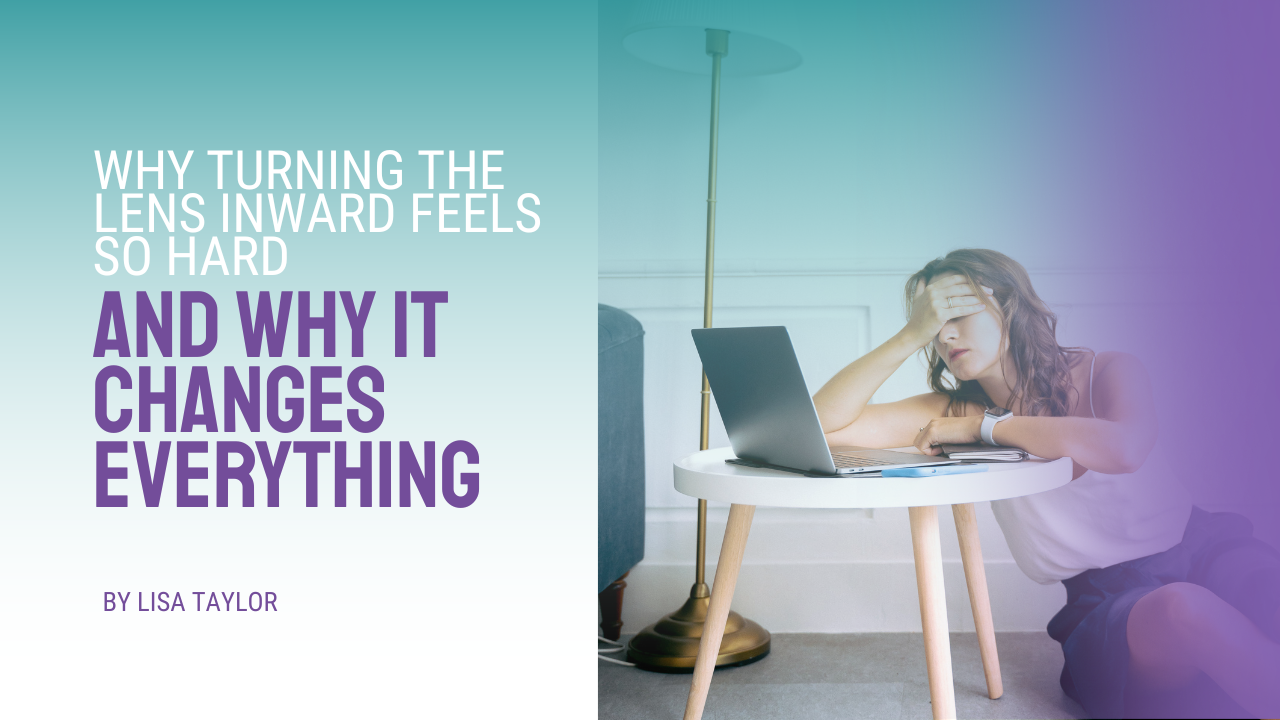
There comes a point where distraction stops working.
The overworking.
The caretaking.
The constant pushing forward.
The staying busy so you do not have to sit with yourself.
Eventually, life has a way of forcing us inward.
For some people, it happens through burnout. For others, through anxiety, grief, relationship breakdowns, parenting struggles, or simply the overwhelming feeling that something no longer feels aligned. What once worked to keep us moving suddenly stops working altogether.
And that is where the real work begins.
We are living in a time where emotional awareness is more openly discussed than ever before. People are learning about trauma, nervous system regulation, boundaries, emotional triggers, and healing. In many ways, this shift is important and necessary.
But there is also another side to it that people do not talk about enough.
Many people are now feeling everything all at once — without knowing how to move through it in a healthy, grounded way.
Instead of suppressing emotions, some people are now becoming consumed by them.
There is a difference between emotional awareness and emotional overwhelm.
And understanding that difference changes everything.
The Shift From Emotional Suppression to Emotional Overload
For generations, emotions were often ignored, minimized, or pushed aside.
People were taught to:
- “Keep going.”
- “Stay strong.”
- “Get over it.”
- “Don’t talk about your feelings.”
Many people learned to disconnect from themselves in order to survive difficult environments, relationships, or responsibilities.
Now the pendulum has swung in the opposite direction.
Today, conversations around mental health, emotional healing, and self-awareness are everywhere. While this has created more openness and understanding, it has also left many people emotionally flooded and overwhelmed.
People are no longer avoiding emotions.
They are drowning in them.
Social media, constant self-analysis, and endless exposure to emotional content can leave people stuck in cycles of overthinking, anxiety, fear, and paralysis. Some people begin identifying so deeply with their emotional pain that it slowly becomes their identity.
Awareness alone does not create healing.
Feeling emotions is important.
Understanding emotions is important.
But living inside emotional chaos without grounding, regulation, or direction can slowly take over every part of your life.
When Emotions Start Running Your Life
This is the part many people quietly struggle with.
At first, emotional awareness can feel empowering. People begin recognizing patterns, wounds, and behaviours they never understood before.
But without balance, emotional processing can eventually turn into emotional exhaustion.
You may notice:
- Constant anxiety or racing thoughts
- Difficulty making decisions
- Loss of motivation
- Emotional paralysis
- Feeling stuck in cycles of fear or sadness
- Struggles maintaining routines or responsibilities
- Isolation from others
- Increased tension in relationships
- Difficulty functioning in everyday life
The emotions themselves are not the problem.
Emotions are signals. They provide information. They reveal what needs attention, healing, or change.
The problem begins when emotions become the driver of every decision, reaction, and belief.
This is where many people lose themselves.
Instead of emotions moving through them, emotions begin controlling them.
And over time, that can create even more fear, shame, confusion, and hopelessness.
Turning the Lens Inward Is About Responsibility, Not Blame
One of the biggest misunderstandings about self-awareness is the belief that turning inward means criticizing yourself or endlessly analyzing everything that is wrong with you.
It does not.
Turning the lens inward is not about blame.
It is about responsibility.
It means becoming honest about:
- your patterns
- your reactions
- your coping mechanisms
- your fears
- your boundaries
- your emotional conditioning
- the stories you continue telling yourself
Many people spend years focusing entirely on external problems:
- what other people did
- how they were hurt
- who disappointed them
- who failed them
While those experiences matter, healing cannot fully happen if all of your focus remains outside of yourself.
At some point, the question shifts from:
“Why did this happen to me?”
to:
“What is this experience trying to teach me about myself?”
That shift is powerful.
Because real healing begins when we stop waiting for the outside world to change before we take ownership of our inner world.
Healing Does Not Mean Abandoning Your Life
One of the dangers of emotional overwhelm is that people can become so consumed with healing that they slowly disconnect from everyday life altogether.
Responsibilities begin slipping.
Relationships become strained.
Work feels impossible.
Motivation disappears.
There can be a tendency to believe:
“I need to fully heal before I can function again.”
But healing does not work that way.
In reality, healing often happens while life is still unfolding.
You still have responsibilities.
You still have relationships.
You still have bills, work, children, commitments, and challenges.
The goal is not to disappear into endless emotional processing.
The goal is to learn how to feel your emotions without abandoning yourself, your purpose, or your life in the process.
This is where structure becomes incredibly important.
Simple things matter:
- movement
- routines
- sleep
- nourishment
- boundaries
- connection
- sunlight
- rest
- meaningful work
- supportive relationships
These are not superficial things. They help regulate the nervous system and create safety within the body.
Healing is not only emotional.
It is physical, mental, relational, and behavioural.
Emotional Strength Is Built Through Small Daily Choices
Many people are searching for a breakthrough moment that will suddenly change everything.
But emotional resilience is rarely built through one massive transformation.
It is built quietly through small, consistent choices over time.
It is built when:
- you stop abandoning yourself
- you create healthier boundaries
- you learn to tolerate discomfort without reacting impulsively
- you stop seeking constant external validation
- you become more honest with yourself
- you choose self-respect over self-sabotage
- you keep showing up even when things feel hard
This is not about becoming emotionless.
It is about becoming emotionally grounded.
Strong people are not people who never struggle emotionally.
Strong people are people who learn how to move through emotions without losing themselves entirely.
That kind of strength creates stability, clarity, confidence, and self-trust.
And in today’s world, that may be one of the most important skills a person can develop.
Turning the Lens Inward Changes Everything
Turning the lens inward is uncomfortable because it requires honesty.
It asks you to stop running.
To stop numbing.
To stop blaming everyone else for your emotional state.
To stop waiting for external circumstances to magically create internal peace.
But it also creates freedom.
Because when you begin understanding yourself at a deeper level, you stop reacting to life in the same way. You begin responding with more awareness, intention, and emotional maturity.
You start recognizing patterns earlier.
You start protecting your energy differently.
You start trusting yourself again.
And little by little, life begins to feel less chaotic.
Not because everything around you suddenly changes overnight.
But because you do.
The goal is not to become emotionless.
The goal is to become emotionally aware without losing yourself in the process.
Frequently Asked Questions
What does “turning the lens inward” mean?
Turning the lens inward means developing self-awareness by examining your emotions, reactions, behaviours, patterns, and beliefs rather than focusing only on external circumstances or other people.
Why does emotional healing feel overwhelming?
Emotional healing can feel overwhelming because many people are processing years of suppressed emotions all at once without having the tools for emotional regulation, grounding, or balance.
Can emotional awareness become unhealthy?
Yes. Constantly analyzing emotions without action, structure, or emotional regulation can lead to anxiety, emotional paralysis, overthinking, and exhaustion.
How do you balance healing with everyday life?
Healing works best when it supports your life rather than disconnecting you from it. Maintaining routines, boundaries, movement, responsibilities, and supportive relationships can help create emotional balance and stability.
What is emotional regulation?
Emotional regulation is the ability to manage and respond to emotions in a healthy and grounded way rather than reacting impulsively or becoming consumed by emotional states.
How do you build emotional resilience?
Emotional resilience is built through self-awareness, nervous system support, healthy boundaries, consistency, self-respect, and learning how to move through discomfort without shutting down or avoiding life.
Why do people avoid turning inward?
Many people avoid turning inward because self-reflection can feel uncomfortable, vulnerable, and emotionally exposing. Staying busy or distracted often feels safer than confronting unresolved emotions or patterns.
Can self-awareness improve relationships?
Yes. Increased self-awareness often improves communication, emotional responsibility, boundaries, and the ability to respond thoughtfully instead of reacting emotionally in relationships.
If this conversation resonated with you, Episode #2 of Turn the Lens Inward goes even deeper into the emotional patterns, overwhelm, healing, and self-awareness so many people are quietly navigating right now.
Watch the full episode and join Lisa Taylor as she explores what it truly means to turn inward, rebuild emotional strength, and reconnect with yourself in a healthier, more grounded way.
Feel Like You’re Living on Autopilot?
It's time to hit pause.
This free, guided experience is your pause button. Your chance to step out of the whirlwind and finally see yourself clearly.

Feel Like You’re Living on Autopilot?
It's time to hit pause.
This free, guided experience is your pause button. Your chance to step out of the whirlwind and finally see yourself clearly.
